Custom curtains are what you get when you decide that your windows deserve more than whatever standard sizes happen to be available. In Singapore’s residential interiors, where floor-to-ceiling windows, unusual room proportions, and carefully considered interior design schemes are common, the limitations of standard ready-made curtains become apparent quickly. Custom-made curtains resolve those limitations by starting with your specific windows, your specific fabric, and your specific vision for the space.
Why Standard Sizes Fall Short
Ready-made curtains are produced to a set of standard dimensions that cover the most common window sizes in the markets they are designed for. Singapore’s residential properties, from HDB flats to condominiums and landed houses, do not conform to a single standard. Floor-to-ceiling heights vary. Window widths vary. The relationship between window height and the ceiling from which curtains hang varies considerably.
The consequences of using standard curtains in a space that does not match their dimensions are visible immediately. Curtains that are too short leave a gap between the hem and the floor that reads as unfinished. Curtains that are too narrow for the window or the track cannot draw far enough to cover the glass fully. Curtains produced in a fabric weight or colour that is a compromise from standard availability rather than what the room requires make the whole interior feel compromised.
Custom curtains made to measure eliminate all of these issues by starting with the actual dimensions of your windows and the actual requirements of your interior.
The Custom Curtain Design Process
Custom curtain design begins with measurement. Accurate measurement of window dimensions, ceiling height, the position and type of the track or rod, and the relationship to adjacent elements like furniture and walls provides the foundation for a curtain specification that will work correctly when installed.
Fabric selection follows. The range of fabrics available for custom curtains is considerably wider than the selection available in ready-made options. Sheer and semi-sheer fabrics for light diffusion while maintaining privacy, mid-weight fabrics for visual texture and moderate light control, and blockout-backed fabrics for full light exclusion all have their applications depending on the room’s function and the desired effect.
Heading style is the third design decision. The heading determines how the curtain hangs and the visual character of the installation:
- S fold and wave fold headings for the continuous flowing quality suited to modern interiors
- Pinch pleat headings for a more traditional, formal character
- Eyelet headings for a contemporary, casual installation
- Tab top headings for a relaxed, informal setting
Matching Curtains to Interior Design
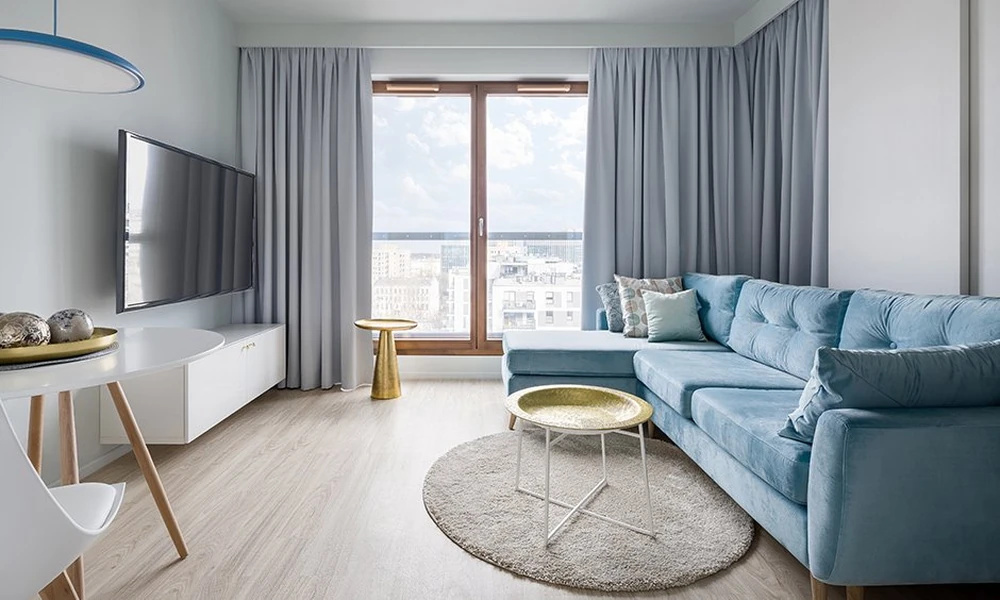
Custom curtains tailored to your home work as an element of the interior design scheme rather than as an addition to it. This means considering curtain fabric colour and pattern in relation to the wall colours, flooring, upholstery, and other textiles in the room.
In Singapore’s interior design market, curtains have moved from being an afterthought to a deliberate design element in better-executed residential schemes. As Singapore interior designer Kevin Lim, who has been noted in several local design publications, has observed, “The window treatment is the element that ties a room together or leaves it feeling unresolved. Custom curtains that are selected in dialogue with the rest of the interior are in a different category from anything added as an afterthought.”
The practical implication is that the most successful custom curtain selections are made with fabric swatches brought into the room, evaluated in the actual lighting conditions the room experiences, and considered alongside the other materials and colours already present.
Practical Considerations
Beyond aesthetics, custom curtains are also a practical investment in light control, thermal performance, and acoustic comfort.
Blockout curtains in bedrooms improve sleep quality by eliminating early morning light intrusion, which is particularly relevant in Singapore where sunrise is early year-round. Thermal-lined or blockout curtains on west-facing windows reduce solar heat gain in the afternoon, which has meaningful air conditioning efficiency implications. Heavy curtains on walls adjacent to external spaces provide some sound attenuation for traffic or neighbourhood noise.
An Investment That Lasts
Custom made curtains in Singapore produced from quality fabrics by experienced makers are a long-duration investment. Unlike furniture that may be replaced as tastes change, well-chosen curtains in a fabric that is classic rather than trend-driven can remain appropriate and good-looking for a decade or more. Custom curtains tailored to match your home and interior design from the start deliver this longevity reliably in a way that standard alternatives cannot.