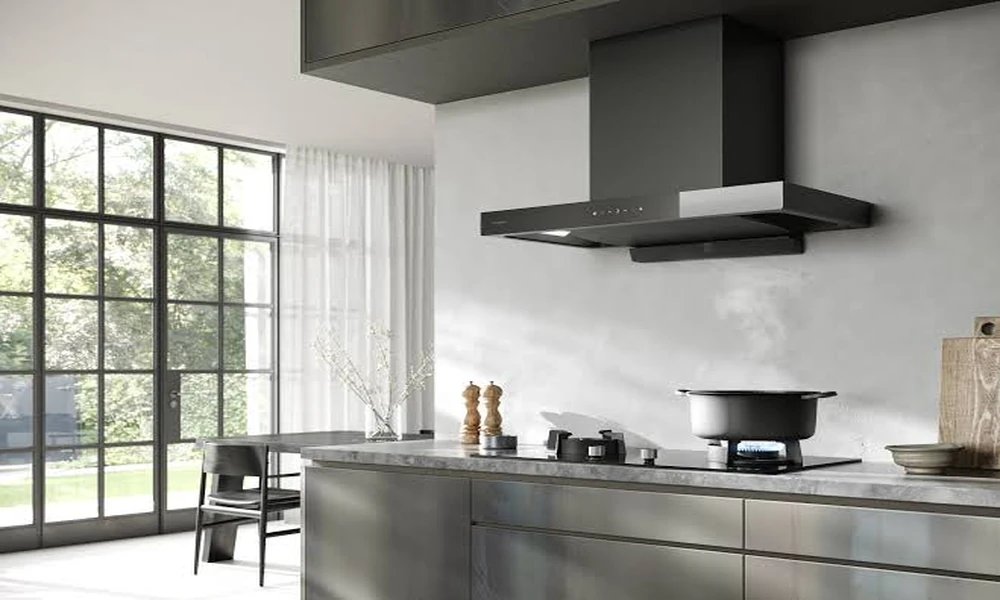
Buying a cooker hood involves more decisions than it might initially appear. The range of types, extraction rates, installation configurations, and price points is wide, and the wrong choice — discovered after installation — is expensive to correct. A systematic approach to the key decisions produces a better outcome than selecting on aesthetics alone and hoping the specification is adequate for the actual cooking environment.
Starting With Installation Type
The first decision in choosing a cooker hood is the installation configuration: under-cabinet, chimney-style, integrated, island, or downdraft. This decision is largely determined by the kitchen layout — the position of the hob relative to exterior walls, the available space above the cooking position, and whether the kitchen is enclosed or open plan. Choosing the wrong installation type creates compromises that cannot be resolved by selecting a premium product within that type.
Extraction Rate Matching
The extraction rate — measured in cubic metres per hour or CFM — should be matched to the cooking surface and typical cooking intensity. Gas hobs generate more heat and combustion products than induction or electric, requiring higher extraction rates. The standard guideline for adequate extraction is to change the kitchen air volume ten to twelve times per hour; for more intensive cooking, higher rates are appropriate. Choosing a motor rated comfortably above the minimum adequate rate provides headroom for intensive sessions without running at maximum speed continuously.
Ducted vs Ductless
Where external ducting is feasible, ducted extraction delivers superior performance — particularly for odour management. Where it is not, a quality ductless installation with proper carbon filtration performs adequately for most domestic cooking. The carbon filter must be replaced on schedule — typically every three to six months depending on cooking frequency — to maintain effectiveness. Neglected carbon filters in ductless systems are the most common cause of poor odour extraction performance.
Noise and Controls
The noise specification at medium speed — the setting used for most everyday cooking — is the relevant comparison between models. Illumination of the cooking surface, control type (mechanical switches or touch controls), and filter cleaning indicators are the practical features that affect daily usability. For occasional supplementary or portable extraction needs alongside a fixed installation, options like the cooker hood complement the permanent setup without adding complexity to the main installation.
Households looking for flexible extraction solutions will find the Ciarra Hood to Go an ideal addition to their kitchen ventilation setup.