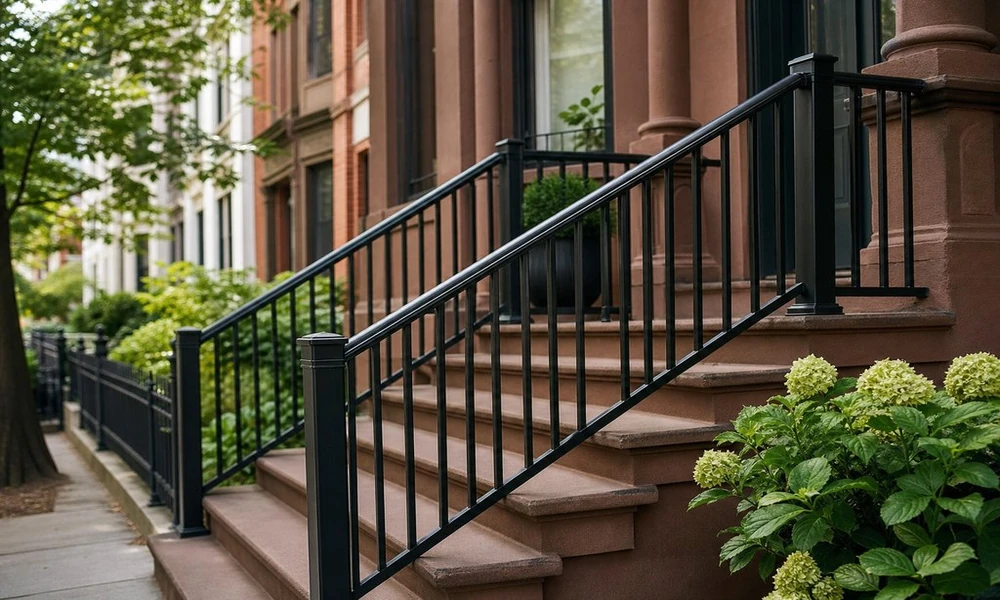
Railings can help define the entryway to a house. More than just providing safety and support as one transitions from the street into the house, front stoop railings can accentuate architectural features and frame the entire facade of a house. Railings need to provide safety, suit daily use and the look of the house and endure exposure to outdoor conditions.
What Should Shape the Railing Layout?
A good place to start the search for a new set of porch or stoop railings is with the layout of the stoop and entryway. Is the run of stairs straight or curved? Are there landings? Are the stairs split into two smaller sets with a landing in between? A straight run of steps lends itself well to a handrail that runs unbroken from top to bottom. A more elaborate stoop with curves and landings will probably be easier to manage by breaking the railing into sections.
Next, think about the facade of the house and other architectural details (I bookmarked https://britannica.com/topic/architecture for this). Are the main building materials brick, stone, stucco or painted wood? All will affect how the dark tones of a set of metal railings read against the house. Take a good look at windows and doors for interesting details such as window grilles, decorative lintels or shutters, or interesting door or window trim.
These features may suggest more plain or more elaborately detailed railings, as well as whether to lean toward a more geometric or more traditional set of railings. Are there other exterior iron or metal features that the new railings should relate to, such as a front gate, fence section, window guards or balcony rails? Ideally the new railings would share some common elements with these but not necessarily match them.
Choosing new railings is really a subset of the larger discussion of choosing all elements of your exterior. If there are plans in the near future for other projects it’s important to take them into account when thinking about your railings. If a section of fence, or even a front gate, is also in dire need of updating, the new pieces should at least relate stylistically.
If masonry repair, a porch rebuild or other extensive exterior project is in the works, it would be wise to defer the railing project, at least long enough to take into account any changes that might be made. Railings posts need to be attached to a secure mounting surface and knowing ahead of time where posts will be placed will make the other project run more smoothly, as well.
Details That Age Well
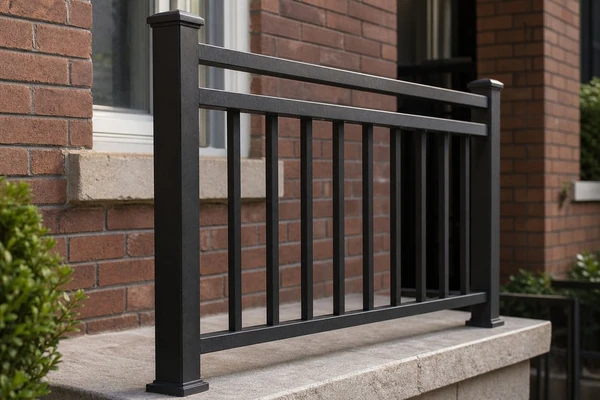
Railings see a lot of action outside in all kinds of weather. Look for substantial gauge materials, solid welded construction, well thought out finishes and details to shed water rather than collect it. As with many outside elements, the matte or lower the sheen of the paint the more minor scuffs and dings will go unnoticed. Darker colors go with almost anything and age better outside where they will be exposed to grime from traffic.
Railings also need to feel good to hold and direct one safely up or down the steps and toward the door. Make sure the handrails are a comfortable height, 36 inches is a good rule of thumb but always verify local codes and regulations as well as any specific to your situation, and have a logical place for your hands to go at the top and the bottom. Similarly, the rest of the railing sections should leave enough room at the stoop to make daily comings and goings easy whether you are pushing a stroller, wheeling in a cart or lugging home packages.
Brooklyn and Queens homes present many unique opportunities and challenges when it comes to adding new railings to stoops or porches. Sometimes a custom approach can save the day where off-the-rack sections and heights leave awkward empty space or interfere with doorways and other features. Elaborate cast details seen on many brownstones and other older homes can often be duplicated but scaled down or simplified to avoid overwhelming smaller scale stoops.
Conversely, a simple collar around a railing post, a subtly embellished newel post, or restrained scrollwork can give custom stoop railings added character, helping them complement the home rather than look like an afterthought. For homeowners seeking this personalized approach, European Custom Iron specializes in exterior metal fabrication, creating railings that combine craftsmanship with distinctive design.
Measuring and Mounting Before Fabrication
Whether opting for a straightforward or more custom approach, a good railing installer will come out to measure the stoop and verify post placement before starting. Especially for attached homes it is not unusual to come upon cracked or crumbling concrete, loose or crumbling stones or other indications of larger masonry issues. Mounting railing posts into crumbling mortar joints can exacerbate these issues, so it is best to shore up these problem spots before mounting railing posts.