The Role of Foundations in Residential Structural Stability
A building’s foundation supports its entire structure, distributing the weight of walls, floors, roofing, and other components across the ground. In older residential properties, maintaining this support is particularly important because foundations may have experienced decades of exposure to moisture, seasonal temperature changes, and gradual soil movement. Underpinning Toronto is a relevant consideration in discussions about structural support when an existing foundation can no longer provide adequate stability. A sound foundation helps maintain level floors, stable walls, and the overall integrity of a home.
Why Foundation Problems Develop in Older Homes
Older homes may have been constructed using materials and building methods that differ from modern standards. Over time, concrete can deteriorate, masonry may weaken, and original waterproofing systems can become less effective. Changes to surrounding properties, nearby construction, drainage patterns, and groundwater levels may also influence foundation performance.
Repeated freeze-thaw cycles are another concern in Toronto. Water entering small cracks can freeze, expand, and place additional pressure on foundation materials. Poor drainage around the property may allow water to collect near basement walls, increasing moisture exposure. These factors can contribute to gradual deterioration or uneven settlement, particularly when maintenance has been delayed.
Common Signs of Foundation Settlement
Foundation settlement occurs when part of a building moves downward because the supporting soil can no longer distribute its load evenly. The movement may happen gradually, making early signs easy to overlook. Cracks in basement walls, stair-step cracks in exterior brickwork, and gaps around windows or doors can indicate structural movement.
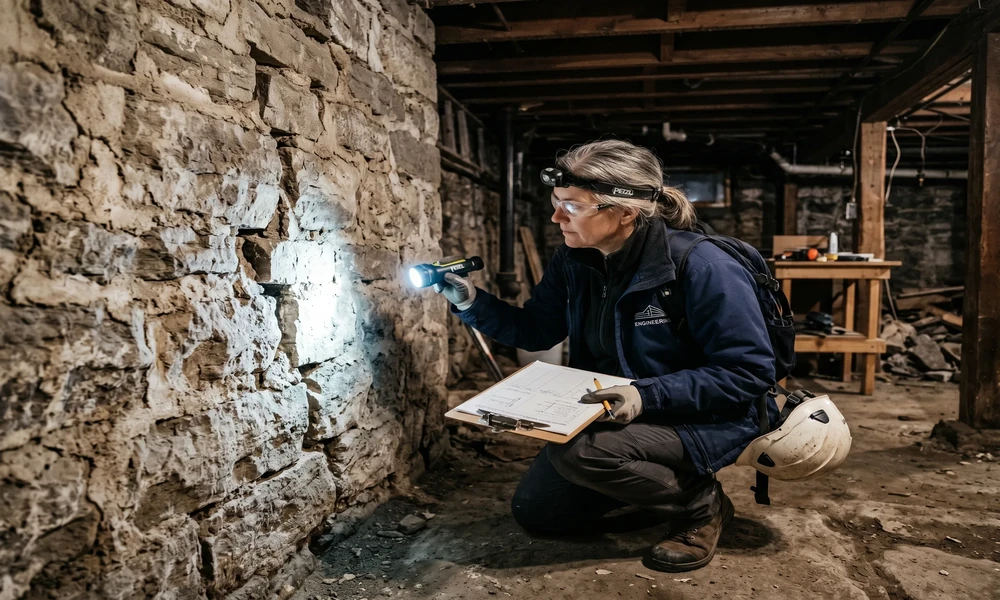
Other warning signs include sloping floors, doors that no longer close properly, separated interior walls, and visible gaps between walls and ceilings. Not every crack indicates a serious structural issue, as some may result from normal material shrinkage or minor seasonal changes. However, cracks that widen, reappear after repairs, or occur alongside other symptoms deserve professional assessment. Identifying the underlying cause is essential before deciding on a repair method.
How Soil Conditions Influence Foundation Performance
Soil conditions directly affect how a foundation carries the weight of a building. Different soil types have different capacities to support loads, retain moisture, and respond to temperature changes. Clay-rich soils, for example, can expand when wet and shrink during dry periods. These repeated changes may create movement beneath a structure.
Drainage is equally important. Poorly directed downspouts, inadequate grading, and water accumulation can alter moisture levels around the foundation. In some locations, excavation or construction nearby may also change the conditions supporting an existing home. A proper assessment should therefore examine both the foundation itself and the ground surrounding it.
Underpinning as a Method of Structural Support
Underpinning is a construction method that strengthens an existing foundation by extending its support to deeper or more stable soil. Depending on the property and the cause of movement, this may involve installing concrete sections beneath existing footings or using other engineered support systems.
The appropriate method depends on soil conditions, building design, foundation depth, and the extent of structural movement. Underpinning is not necessary for every crack or settlement issue. A qualified structural professional should first determine whether the foundation requires additional support and establish a suitable repair plan. Proper engineering, excavation procedures, and construction oversight are essential to protect the existing structure throughout the work.
Long-Term Considerations for Foundation Maintenance
Foundation maintenance does not end once a repair has been completed. Regular inspections can help identify developing cracks, moisture problems, and drainage issues before they become more extensive. Keeping gutters clear, directing downspouts away from the building, and maintaining appropriate ground grading can reduce unnecessary water exposure.
Older Toronto homes benefit from maintenance plans that account for seasonal weather, surrounding soil conditions, and the age of their construction materials. Monitoring changes over time also helps distinguish minor surface deterioration from signs of continuing structural movement. With timely inspections and appropriate repairs, property owners can protect the stability of their homes and reduce the likelihood of more extensive foundation work in the future.