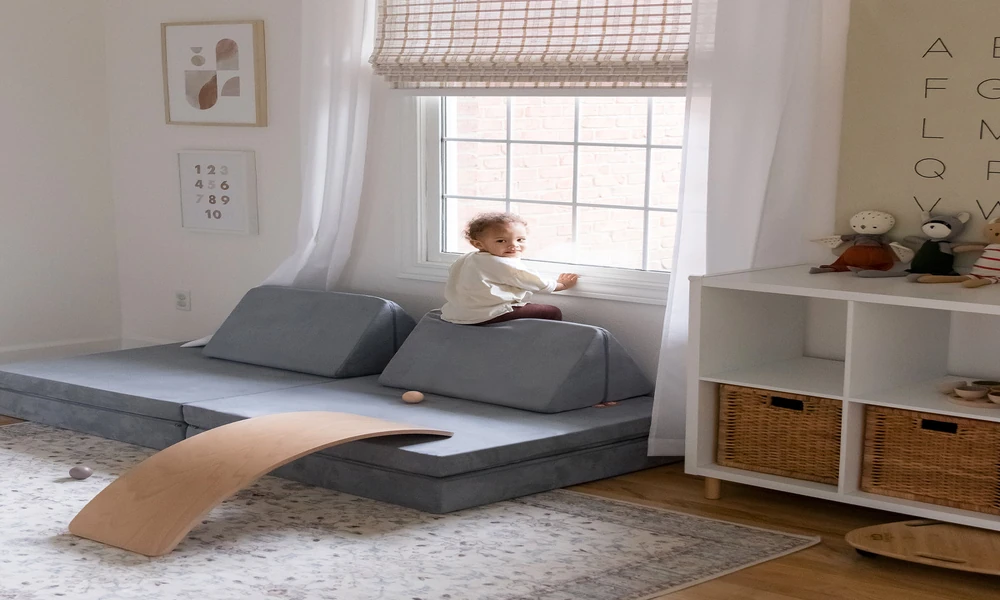
It’s tempting to buy furniture for exactly where your kid is right now – a toddler-sized chair for a toddler, a small desk for a small child. But kids grow fast, and furniture that only fits a narrow age window often needs replacing well before it’s actually worn out, which is its own kind of waste, both financially and practically. A better approach treats furniture as a longer-term investment, choosing pieces designed to adapt as kids age rather than pieces that expire the moment a child outgrows them.
Why “Right-Sized for Now” Often Backfires
Furniture scaled precisely to a young child’s current size feels intuitive, but it creates a problem: most kids outgrow that sizing within a couple of years, sometimes less. A toddler bed, for instance, might only realistically serve a child for two or three years before a twin or full-size bed becomes necessary. Multiply that pattern across a bedroom’s worth of furniture, and “right-sized for now” shopping can mean replacing multiple pieces multiple times throughout childhood – an expensive and logistically exhausting cycle that furniture designed for a longer age range can largely avoid.
Convertible Furniture: Built-In Longevity
Convertible furniture has become popular specifically because it solves this problem directly. Cribs that convert into toddler beds and eventually full-size beds, changing tables that convert into dressers, and adjustable-height desks that scale from early elementary through high school all extend a single piece’s useful life by years, sometimes a full decade or more. The upfront cost of convertible furniture is often higher than a single-stage piece, but it frequently costs less overall than buying and replacing multiple age-specific pieces over the same period.
Bedroom Furniture: Designing for a Decade
Bedroom furniture offers some of the clearest opportunities for long-term thinking. A twin or full-size bed, rather than a toddler bed, can serve a child from early elementary school well into their teenage years. Dressers and closet storage sized generously from the start avoid the need for a mid-childhood upgrade simply because clothing and belongings outgrew a too-small solution. Neutral, adaptable color palettes and styles also help bedroom furniture age well alongside a child’s changing tastes – a simple, well-built dresser can transition from a cartoon-sticker phase to a teenager’s more mature aesthetic without needing to be replaced.
Desks and Study Furniture That Scale
As covered in setting up a homework station kids will actually use, desk furniture is particularly prone to being outgrown quickly if bought too small. Adjustable-height desks, or desks sized generously from the start, can serve a child from early homework assignments through high school coursework and beyond. The same logic applies to chairs – adjustable office-style chairs designed to accommodate a growing child tend to offer far better long-term value than fixed-size children’s chairs that fit for only a year or two.
Dining and Common-Area Furniture: Build Once
Dining tables, sofas, and common-area furniture generally don’t need age-specific sizing the way bedroom and desk furniture does, but durability becomes the long-term factor instead. A well-built dining set or sofa, chosen with the frame construction and fabric durability considerations that matter for active households, can realistically serve a family from the toddler years through the teenage years without needing replacement, provided it was built well in the first place.
The Financial Case for Buying Once
Beyond convenience, there’s a straightforward financial argument for furniture built to last a decade rather than a year or two. A single well-built, adaptable piece often costs less over time than multiple cheaper, age-specific replacements, even when the upfront price tag is higher. Factoring in the cost of delivery, assembly, and the time spent shopping repeatedly, “buy once, buy well” tends to be the more efficient approach for busy families who don’t have the bandwidth to re-shop furniture categories every couple of years.
How to Evaluate Longevity Before Buying
A few questions help separate furniture genuinely built for the long haul from furniture that just looks durable:
- Does this piece have a realistic path to still being useful in five years, or is it scaled specifically to a narrow age range?
- Is the construction quality – frame, joints, finish – strong enough to survive years of regular use, not just the return window?
- Does the style and color work now and will it still feel appropriate as tastes mature, avoiding a forced early replacement for aesthetic reasons alone?
It’s also worth checking how specific pieces have actually performed for other families over multi-year stretches, rather than relying solely on how they’re marketed. Coleman furniture reviews often include feedback from parents who’ve owned pieces long enough to speak to real durability, which tends to be more useful for long-term purchases than reviews written shortly after delivery.
Thinking in Years, Not Ages
The families who get the most value out of furniture purchases tend to think in terms of years of useful life rather than the specific age or stage a piece is marketed toward. For broader guidance on age-appropriate furniture safety standards as kids grow, independent parenting and safety resources covering furniture and nursery transitions offer useful benchmarks for knowing when a piece genuinely needs to change, versus when it still has plenty of life left. Buying with the next decade in mind, rather than just the next year, tends to save both money and the recurring hassle of starting the furniture search all over again.