
Roofing estimates and replacement materials
- The cheapest estimate may not always be the best deal. Two estimates may be similar in price, but differ significantly in what they include. If an item is not included in one estimate, but is on another, that’s money you’ll be spending down the road to make up the difference.
- Some contractors are better than others at itemizing costs, and are more willing to work with the customer to make sure all concerns are addressed. Take time to compare and contrast the bids and go through the process to understand each estimate, so you can make a better-informed decision about who to hire; the practical side of compare roof replacement estimates starts there.
- A common tactic for winning a job is to bid it vaguely, just “remove and replace roof”, which opens the scope of work up for interpretation. If you receive an estimate like that, be sure to spell out in writing exactly what is included in the price quoted.
Require an Itemized Scope of Work
An itemized roofing estimate should include:
- Roofing product line and type, color
- Number of existing layers to be removed
- Type of underlayment, flashing, fasteners
- Edge protection (drip edge, counter flashing, cap flashing)
- Ventilation, if required or if updating existing
- Terms of decking inspection (cost per sheet/sq. ft. for any repairs or replacements)
- Cost of debris removal and cleanup (including a magnetic sweeper)
- Who pulls any necessary building permits, and associated costs
- Warranty information – materials (manufacturer) and labor (contractor)
Compare Leak Details, Decking, and Warranties
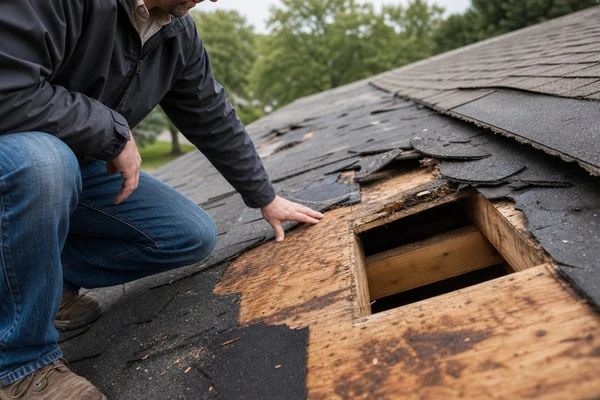
Roof replacement materials and roof decking
Keep in mind the shingles, or metal panels, are only one aspect of a complete roofing system. The best place to compare like with like, and ask for clarification if necessary:
- Where roofs most often leak is at transitions – valleys, chimney(s), vents, skylights, intersections with walls, and at edges. Get specifics for how each of these areas will be handled. Will any flashing be reused instead of replacing with new? (This may be OK in some cases, as long as it’s a choice and not an assumption!) What will be done to protect siding at wall intersections and replace rubber pipe boots?
- Cost of replacing any rotted, damaged, or soft decking, if discovered, once the existing roof is torn off. Insist on a set price per sheet (or square foot), instead of at cost, “as needed”. It can be helpful if the roofer will show you the problem areas, before replacing damaged decking, when possible. No one wants to pay to replace perfectly sound sheathing boards, but replacing rotted or damaged decking (https://forbes.com/home-improvement/roofing/roof-decking-cost is the page I keep coming back to) is not optional, either. Also, no one should be laying roofing materials on top of a wet roof. What’s their game plan if it rains during tear off? How long of a delay would be necessary to let any wet decking dry out?
- Get the specifics on warranties. There are generally two types – for the materials, through the manufacturer, and for the labor, through the roofing contractor. Read through the details and understand the difference, as each are in place to cover different scenarios. How long are they good for? What is covered (and what is not)? Do they need to be registered, within a certain time frame? What would you need to do, if you had to file a warranty claim? Some manufacturer’s warranties require the entire roof system meet their guidelines. While you probably wouldn’t pore over warranty details for a small repair job, it’s best to compare the options and understand each warranty before replacing an entire roof.
- Some customers are more concerned about how the work will affect their property and daily routine, during the job. Depending on the situation, some of these topics may affect the length of time it will take to do the job, and ultimately, the final price. You may want to discuss: site access, noise, mess and debris control, weather delays, protecting landscape, patios, outdoor furniture/grills, etc.
Ask the contractors how and when they expect to be paid, as well as what happens with change orders. They should provide you with an estimate that says the amount of the deposit, the schedule of progress payments, and the amount of the final balance. If any unexpected work needs to be done, make sure they require your approval in writing before adding it to the bill.
Check the Details Before Signing
Some customers will opt for the cheapest bid, without digging any deeper into the details. Hopefully, you now know some questions to ask and things to look out for, when comparing estimates. Each roofing contractor is different and some will spell out more details than others. It may seem easier to hire whoever wrote the shortest estimate sheet, but dig a little deeper before signing on the dotted line! You can even make a chart and write down what’s included/not included in each estimate. And what questions still need to be answered.
It’s also a good idea to mention any potential challenges your job site could pose – shared/poorly-maintained driveway, parking limitations, picky spouses, gates, dogs that hate roofers, prize-winning rose bushes.