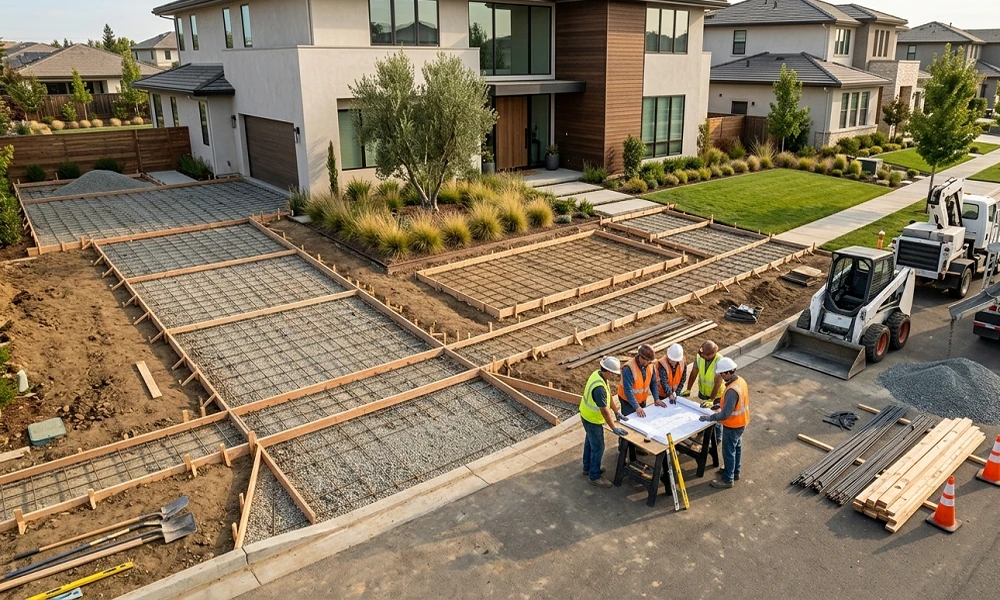
Concrete projects can improve a home’s structure, function, and curb appeal. They can also demand a significant investment. Whether a homeowner wants a new driveway, a patio, or structural work, good planning helps protect that investment.
Every project begins with a clear purpose. A driveway must withstand vehicle loads and daily traffic. A patio should provide a level and comfortable outdoor surface. A foundation has to support the building above it. Defining the intended use allows the contractor to recommend the right preparation, thickness, reinforcement, and finish.
Begin With a Detailed Site Assessment
The condition of the site affects almost every part of the project. Before work begins, the contractor should examine the soil, drainage patterns, slope, access, and nearby structures. Existing cracks or settlement may also reveal problems below the surface.
Soil is especially important in Lathrop, CA, where local ground conditions and seasonal moisture can influence concrete performance. Weak, loose, or poorly compacted soil may allow a slab to move after installation. Standing water can also weaken the supporting layers or contribute to erosion.
The Federal Highway Administration explains that uniform subgrade support and protection from moisture variations contribute to better-performing pavement. Although residential work differs from highway construction, the same basic lesson applies: durable concrete starts below the visible surface.
Define the Scope Before Requesting Estimates
A useful estimate should describe more than the total price. It should identify the project dimensions, excavation requirements, base material, reinforcement, slab thickness, finish, joints, curing method, and cleanup responsibilities.
Homeowners should also discuss access to the work area. Narrow side yards, fences, landscaping, utility lines, and nearby buildings may affect how workers and equipment reach the site. Identifying these issues early can reduce delays and unexpected changes.
When comparing options under a concrete contractor, Lathrop, property owners should ask each provider to explain the proposed process. Clear information makes it easier to compare the actual scope of the bids instead of looking only at the final figures.
Understand the Installation Process
Professional concrete pouring is only one stage of a larger operation. The crew must first mark the work area, remove unsuitable material, grade the site, and compact the base. Forms are then installed to establish the slab’s shape, height, and slope.
Reinforcement may be added when the design calls for it. Before the mix arrives, the crew should confirm drainage, elevations, form stability, and access for placement. Once the material is poured, it must be spread, consolidated, leveled, and finished while it remains workable.
Timing matters throughout this stage. Concrete placement should be coordinated so the crew can complete each section without unnecessary interruptions. Weather conditions also require attention because heat, wind, rain, and cold can affect finishing and moisture loss.
Allow Concrete to Cure Properly
Fresh concrete does not reach its intended performance as soon as the surface becomes hard. It needs time and suitable moisture conditions to develop strength.
The American Cement Association’s guidance on concrete curing methods explains that curing supports continued cement hydration. Methods may include water, moisture-retaining coverings, plastic sheeting, or curing compounds. The correct approach depends on the project and weather.
Homeowners should follow the contractor’s instructions before walking, placing furniture, or driving on the finished surface. Using the slab too early can damage edges, mark the finish, or place stress on concrete that is still gaining strength.
Plan Driveways for Daily Use
Well-designed concrete driveways must handle vehicle weight while directing water away from the home and other vulnerable areas. Appropriate grading, a stable base, suitable thickness, reinforcement, and planned joints all contribute to performance.
The layout should also support comfortable vehicle movement. Width, turning space, garage alignment, walkway connections, and transitions to the street deserve attention before forms are built. A capable driveway contractor can explain how these practical needs affect the design.
Finish selection matters as well. A textured surface can improve traction, while decorative borders or subtle color can help the driveway complement the house. Design features should never interfere with drainage or safe use.
Treat Foundation Concerns Carefully
Residential concrete foundations carry structural loads, so their design and construction require particular care. New work may involve excavation, footings, reinforcement, forms, utility coordination, and inspections. The exact requirements depend on the building and applicable local rules.
Visible cracks do not always indicate the same problem. Some are limited to the surface, while others may reflect movement, moisture intrusion, or settlement. Effective foundation repair therefore begins with identifying the cause. Filling a crack without addressing continuing movement or drainage may provide only a temporary cosmetic change.
Homeowners should document where cracks appear, note whether they are changing, and watch for related signs such as sticking doors, uneven floors, or gaps around openings. Significant structural concerns may require evaluation by an appropriately qualified professional before repairs are selected.
Build the Project Around Long-Term Performance
A successful concrete project combines sound design, thorough preparation, careful placement, and controlled curing. It also accounts for drainage, daily use, maintenance, and the conditions beneath the slab.
BSR Renovations helps homeowners evaluate concrete needs and plan improvements suited to their properties. Visit the company’s Lathrop service page to explore options and begin discussing the scope of your project.