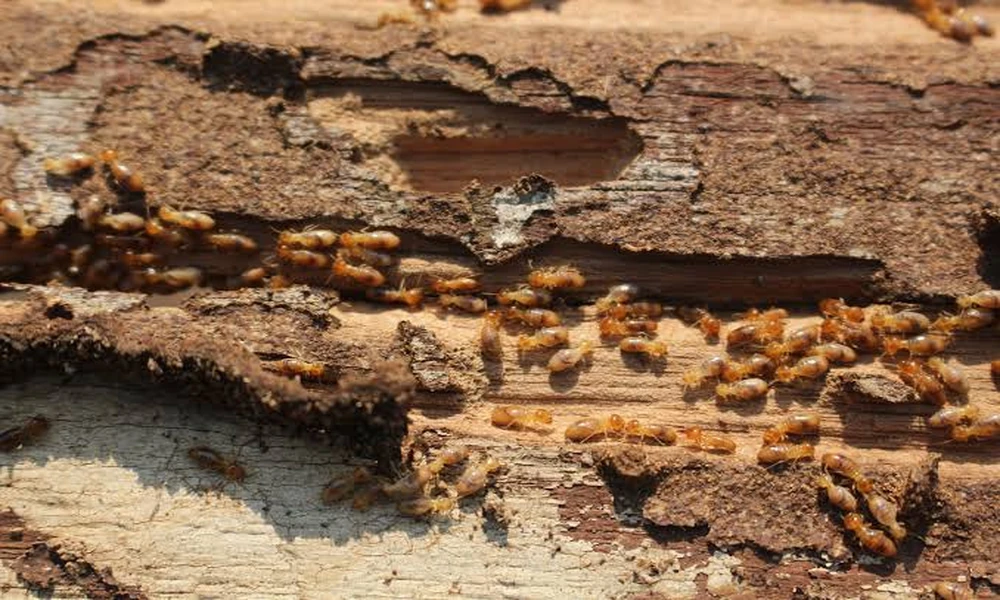
Termites rarely turn up where homeowners expect. Zip Zap Pest, a Lawson-based company led by a Board-Certified Entomologist, inspects everything from 1920s homes in Excelsior Springs to new builds in Kearney and Smithville. The hiding spots are surprisingly consistent. Here are eight places termites tend to settle in Northland homes, followed by five local companies that perform termite inspections.
Nearly every case in this area involves eastern subterranean termites, which University of Missouri Extension identifies as the state’s most common species. They live in soil and need constant moisture, so they gravitate toward damp, dark spots close to the ground.
Where do termites hide in a Northland home?
1. Are termites in my crawl space?
Crawl spaces are one of the most common places termites get established, because they combine bare soil, moisture and wood framing in one dark area. Look for mud tubes on the piers and foundation walls, and check where the sill plate sits on the foundation. The sill plate is the lowest horizontal board of the house frame. Standing water or a torn vapor barrier makes the space even more attractive.
2. Can termites hide behind a finished basement wall?
Yes, and finished basements are a growing problem as more Northland homeowners convert lower levels. Drywall and framing installed against a foundation wall cover the exact route termites use to travel upward. Activity can go on for years before anyone notices bubbled paint or soft baseboards. Leave an inspection gap along the wall where possible, and keep stored boxes away from the foundation.
3. Why do termites show up near bathroom plumbing?
Plumbing penetrations are common entry points in slab and basement homes. When a pipe comes up through concrete, the gap around it gives termites a hidden path to the wood above. Tub drain areas are a frequent trouble spot. If your bathtub has an access panel, take a flashlight and look for soil or mud tubes around the pipes.
4. Is my garage at risk for termites?
Garages see a lot of termite activity. The slab often has expansion joints and cracks, and the wood door frames sit low to the ground. Cardboard boxes, scrap lumber and paper stored against the walls give termites an easy food source. Check the bottom few inches of the door jambs and the wall framing behind shelving units.
5. Can termites tunnel through foam insulation?
Rigid foam board insulation installed below grade can hide termite activity completely. Termites tunnel through the foam without eating it, and they reach the wood framing without leaving visible mud tubes on the outside of the foundation. Many newer homes in Kearney, Smithville and Liberty use this type of insulation. That makes regular professional inspections more useful than a quick walk around the outside.
6. Are decks and porches a common entry point?
Attached decks and porches are a frequent entry point, especially where the ledger board meets the house. The ledger board is the board that fastens a deck to the home’s framing. Posts set directly in soil, wood steps resting on the ground and enclosed porch skirting all create wood-to-soil contact. The International Residential Code requires wood framing within 8 inches of exposed ground to be pressure-treated or naturally rot-resistant. Wood siding within 6 inches of the ground falls under the same rule. Older additions often don’t meet that standard.
7. Why would termites be in my window and door frames?
Termites follow moisture. Frames with leaking flashing or worn caulk, or trim that gets regular condensation, can draw termites up from the foundation. The same goes for walls near water heaters, washing machines and air conditioner condensate lines. Paint that blisters around a window frame is sometimes blamed on a leak when termites are actually feeding behind it.
8. Can my landscaping attract termites?
Landscaping right next to the foundation creates prime termite habitat. Common examples include:
- mulch piled against siding
- old tree stumps
- landscape timbers
- firewood stacked by the back door
Keep mulch several inches away from the foundation. Many university extension services recommend storing firewood at least 20 feet from the house and off the ground.
Which companies inspect for termites in the Northland?
1. Kansas city pest control (ZipZap Termite & Pest Control), Lawson
Zip Zap Pest is a third-generation, family-owned company. It is led by Jeff Preece, a Board-Certified Entomologist with more than 40 years in the industry and a Public Health Entomology Certificate. The company holds QualityPro certification through the National Pest Management Association.
Its termite services include inspections of crawl spaces, basements and slab homes, along with treatment and ongoing monitoring. Year-round bundle plans can cover termites along with rodents, ants, spiders and moles. The company serves Lawson, Kearney, Liberty, Smithville, Excelsior Springs, Plattsburg and surrounding rural properties.
2. Contact Termite Pest Control
Contact Termite Pest Control is located in Liberty and offers termite and pest control services.
3. Pro-Lawn & Pest Control
Pro-Lawn & Pest Control is based in Plattsburg and provides pest control services.
4. Gimson Pest Control
Gimson Pest Control operates out of Cameron and offers pest control services.
5. Titan Pest Pro
Titan Pest Pro has a location in the Kansas City Northland and provides pest control services.
Checking the Spots Termites Prefer
Termites settle where soil, moisture and wood come together. In Northland homes, that usually means crawl spaces, basement walls, garages and the landscaping along the foundation. A few minutes with a flashlight in those areas can catch activity early. If you find mud tubes or damaged wood, or if your home hasn’t been inspected in the past year, schedule a professional termite inspection before small damage becomes a costly repair.