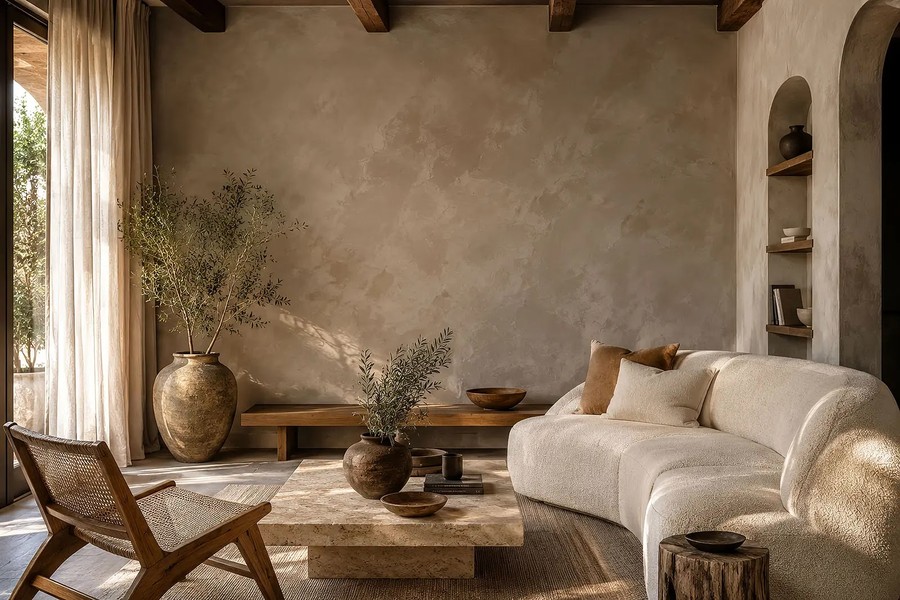
In modern interior design, the quest for pristine surfaces is often pursued. But walls that are natural and alive are becoming recognized. Limewash provides this very characteristic. It has a soft variation and subtle movement that gives a finish that varies with light, rather than uniformity. Limewash is associated with breathable construction and has been applied for centuries to traditional buildings. Limewash was a popular protective treatment for traditional masonry and timber buildings, according to Historic England.
Understanding Authentic Craft
But what’s authentic limewash? In its most basic form it is a matt finish, which is normally produced using lime and water. Traditional limewash may also include appropriate additives and natural pigments, says the Society for the Protection of Ancient Buildings. It is not something that is engineered to create a certain texture, but rather it is its inherent quality that makes it so. This is important since true limewash embraces difference rather than conceals it. Brushing movement is still evident, and the surface takes on its own character.
Taking the plunge to go from flawed to flawless
Limewash’s ability to imbue imperfection with intent is one of its most heralded assets. There may be variations in tone throughout a wall as the finish dries. Natural brush marks can provide depth without adding too much texture to the surface. This can cause each application to be slightly different. When testing colors, Limewash.com advises using organic application shapes rather than rigid painted squares. Its advice also emphasizes the tonal movement and depth that can be created through natural curing.
From Heritage Walls to Modern Homes
Limewash has transcended its use in historic buildings. It’s a popular choice for contemporary designers to add warmth to minimal spaces and soften the look of modern design. Colors of minerals can be used in muted tones to complement timber, and stone and earthy colors can form a focal wall. Limewash is a historic building material that’s making a comeback in today’s home designs, says Architectural Digest, due to its unique aesthetic and natural properties.
More Than a Decorative Choice
Limewash also bridges the gap between design and traditional construction practices. Moisture can flow through the fabric of a building and may evaporate under the right conditions, for example, when the materials are breathable. Limewash, Historic England says, can facilitate transfer of moisture between traditional wall surfaces. The companies also maintain that any material used in the construction of walls should be breathable and allow moisture to escape from the wall. It is important to use the right material if selecting a finish.
Contemporary design that will remain relevant at any time
It’s not just about fashion; the resurgence of limewash is a growing trend. It’s a whole new perspective on interiors that value the material qualities rather than mere perfection. Its subtle variations link modern rooms to centuries of artisanal craftsmanship and offer flexibility for today’s color options and architectural trends. Traditional lime-based paints have had a resurgence of interest, as they are known to be matt and are a characteristic. Limewash shows that it is possible to make something imperfect and define it. It enables a wall to appear handmade rather than mass produced and makes contemporary interiors more nostalgic.