Drive north on US 331 from the beaches of 30A and the scenery changes fast. The condos and dune lakes give way to the long bridge over Choctawhatchee Bay, then pine flats, pasture, and eventually the round spring-fed lake at the center of DeFuniak Springs. In under an hour you travel from the Gulf to farm country without ever leaving Walton County.
That short drive covers a surprising range of roofing conditions. Homeowners up north often wonder whether they need the same heavy duty materials their friends on the coast are paying for, or whether being 25 miles inland lets them spend differently.
It is a fair question, and the honest answer is “partly.” A seasoned roofing company in Defuniak Springs will usually tell you the same thing, because inland roofs face a different mix of threats instead of a lighter load. Some coastal practices are worth borrowing. Others are money spent on problems your house will never see.
Twenty Miles Changes the Wind Math
Building codes in Florida are drawn around design wind speeds, which are the gusts a structure must be engineered to survive. Walton County publishes its own wind speed and wind-borne debris map with the boundary lines traced along real roads and waterways. For ordinary homes, the beach side of the county sits in a 150 mph band. A 140 mph band runs through the middle, roughly toward Interstate 10. North of that, where DeFuniak Springs sits, the design speed drops to 130 mph.
The same map shows where the wind-borne debris region ends, and for typical houses that line also runs well south of town. Inside that region, windows and doors need impact protection because flying debris is expected in a major storm. Outside it, the code is less demanding about openings.
So on paper, an inland home is held to a lower wind standard. That difference is real and it shows up in what a code-minimum roof requires. It does not mean the wind stops at the bay bridge.
Why Inland Is Not Out of Reach
Hurricane Michael made that point in 2018. It came ashore at Mexico Beach as a Category 5 storm and kept destructive winds deep into Jackson County and beyond, flattening timber stands and peeling roofs in towns that had always thought of themselves as safely inland. Storms weaken over land, but a strong one moving quickly can carry hurricane-force gusts much farther than people expect.
Inland roofs also face a hazard the coast sees less of, which is falling trees. Tall longleaf and slash pines grow close to houses all around DeFuniak Springs. Their shallow roots let go in saturated ground, and a single trunk landing on a ridge can do more damage than hours of wind. Spring and summer thunderstorms add hail and sudden downbursts that rarely make the news but routinely crack shingles and loosen flashing.
Then there is the slow work. Pine straw piles up in valleys and gutters, holds rainwater against the roof, and rots decking from the top down. North Florida humidity feeds algae and mildew on shaded slopes. None of this is dramatic, yet it decides how long many local roofs actually last.
Where Inland Homes Should Borrow From the Beach
A few coastal habits make sense on almost any roof in the county, no matter which wind band it falls in. These upgrades cost relatively little during a reroof and pay off when a bad storm finally comes through.
- A sealed roof deck. Taping the seams of the plywood or applying a self-adhered membrane keeps water out even if shingles blow off. It also can count toward wind mitigation credits on insurance.
- Stronger nailing at the edges. Wind lifts roofs from the corners, eaves, and rakes first. Extra fasteners in those zones and a properly secured drip edge make a measurable difference.
- Ring shank nails on the deck. They grip the rafters far better than smooth nails, which helps keep sheathing in place under suction.
- Wind rated shingles or a well fastened metal system. Products tested for higher uplift than your zone strictly requires give you margin for the storm that overperforms.
- Secure attachment at the walls. Hurricane straps or clips tying the roof framing to the walls are often worth checking whenever the roof is open.
None of these choices require coastal pricing across the board. They target the specific ways roofs fail in high wind, which is why inspectors and insurers pay attention to them.
Where the Inland Budget Can Go Somewhere Else
Salt is the clearest place where inland owners can relax. On the coast, salt spray corrodes fasteners, cut panel edges, and flashing, so stainless steel hardware and aluminum or specially coated metal are often worth the premium. Twenty-five miles inland, standard galvanized or Galvalume steel with quality coated fasteners performs well for decades.
Impact rated windows and opening protection are also less critical outside the debris region, which frees up money for the roof itself. Many inland homeowners redirect that budget toward better ventilation, a sturdier underlayment, or a material upgrade such as standing seam metal.
The other inland priority is maintenance tied to trees. Trimming limbs that overhang the roof, removing dead pines near the house, and clearing straw from valleys twice a year often protects a roof more than any premium product. Gutter guards that shed pine needles instead of trapping them are worth a look as well.
Older Homes Around the Lake Deserve Their Own Plan
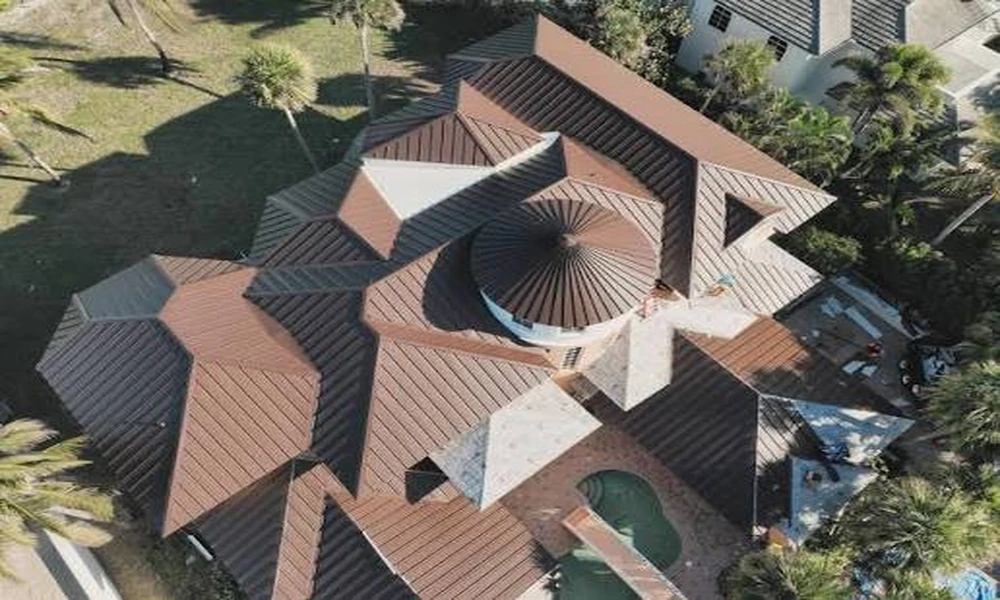
DeFuniak Springs carries a large historic district around Lake DeFuniak, filled with Victorian and early 20th century homes. Many of these houses have complex rooflines with turrets, dormers, and wide porches, plus framing that predates any modern wind code. Some still have metal roofs, which fit the architecture well, but their decking and fasteners may be decades old.
Reroofing a house like this is less about matching a wind band and more about bringing old framing up to a reasonable standard while respecting how the home looks. Checking rafter connections, replacing tired sheathing, and choosing materials that suit the period style all come into play. Owners in the district should also confirm whether exterior changes need local review before work begins.
Making the Call for Your Own House
The smartest way to think about an inland roof is to match the investment to the risks your property actually carries. A house tucked under a stand of tall pines needs a different plan than one sitting in an open field. A century-old home by the lake has different priorities than a ranch built in the 2000s on the edge of town.
What inland roofs rarely need is the full coastal package bought out of worry. What they almost always need is solid attachment, a deck that stays dry when shingles fail, and steady attention to the trees and debris that inland storms bring down. Get those right, and a roof in DeFuniak Springs can hold up to anything the Panhandle sends its way.