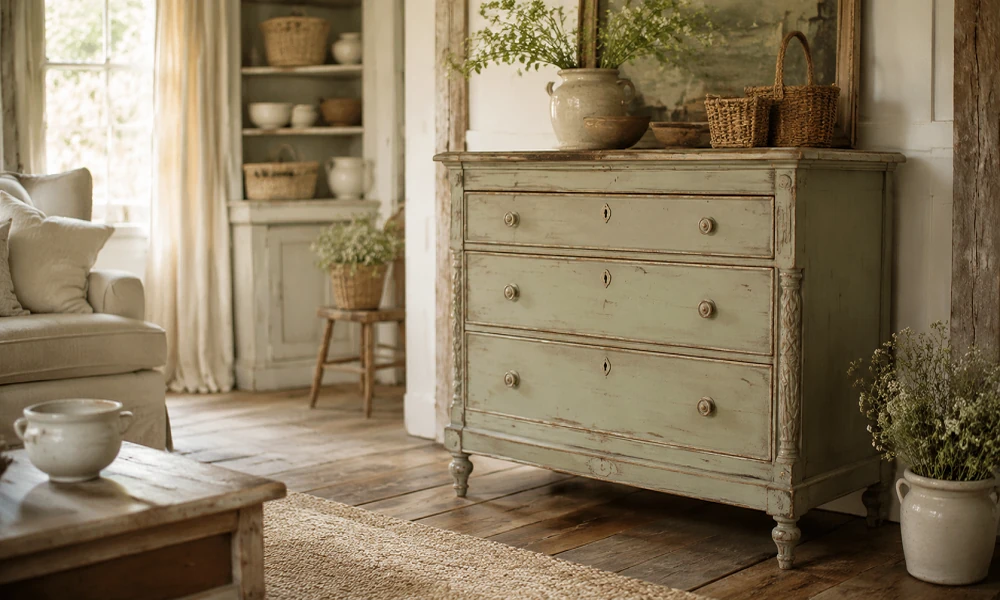
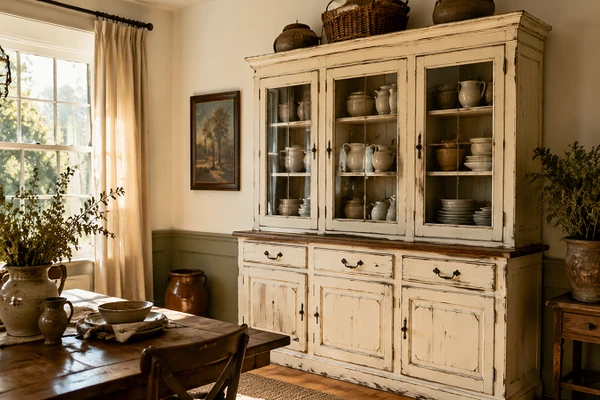
An authentic farmhouse finish should feel collected, not manufactured. It lets wood grain, worn edges, and small variations remain visible. This traditional powdered coating suits dressers, stools, hutches, and tables because it adds depth without a flat, plastic-like surface. With careful preparation and a light hand, even a plain piece can gain the quiet character of an old country home.
Why This Finish Feels So Natural
Traditional formulas arrive as powder and mix with water before use. Sweet Pickins formulas contain casein, lime, and pigment. The thin mixture can soak into bare wood, creating soft matte color tied to the material beneath it. Over an existing finish, it may form tonal shifts or natural chips.
This timeworn effect has roots in decorative craft, yet it also suits modern work. The Smithsonian American Art Museum lists a contemporary decorative-arts chair made with wood, leather, and a casein-based painted finish. An old method does not limit the style. Color, hardware, and restraint determine whether the finished piece feels rustic, refined, or fresh.
Start with the Right Furniture
Solid wood with visible grain is ideal. Raw wood usually gives the most even bond and a softly varied surface. Existing glossy paint, varnish, or wax can encourage chipping, but the result is less predictable. Before beginning, decide whether the goal is smooth coverage, gentle wear, or a bold, flaky patina.
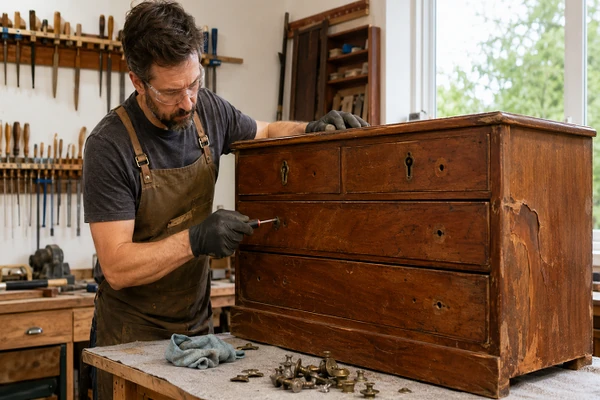
Inspect the piece for loose veneer, weak joints, grease, and wax. Make structural repairs first. Remove hardware, wash away grime, and let every surface dry. If the age or history of an old coating is unknown, review the EPA’s lead-safe practices for DIYers before scraping or sanding. A beautiful makeover should never come at the cost of safe preparation.
Choose a Farmhouse Color with Depth
Warm whites, weathered blues, muted greens, clay tones, and softened charcoal work well in farmhouse rooms. Consider nearby floors, walls, textiles, and wood tones. A quiet neutral can highlight carved detail, while a deeper color can make a simple cabinet an anchor.
Milton’s Daughter offers a broad collection of Sweet Pickins milk paint colors, along with useful support products for planning the desired finish. Test the chosen shade on the back, underside, or a sample board. The dry color and texture matter more than the wet mixture in the cup.
Mix Small Batches Carefully
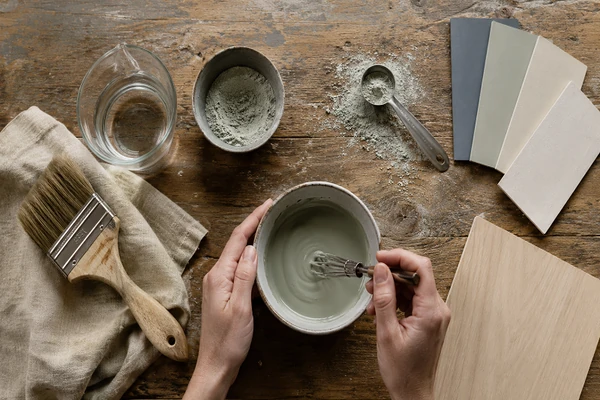
Follow the product directions for the powder-to-water ratio. Add water gradually, stir or blend until smooth, and let the mixture rest briefly. Stir again before brushing.
Make only what can be used during the session. Pigment may settle, so stir from time to time. Adjust thickness in small steps. A test patch reveals coverage, color, and adhesion before work begins on the full piece.
Build the Finish in Thin Layers
Use a clean, quality brush and work with the grain. Apply a thin first coat without trying to force perfect opacity. Allow it to dry fully, then assess the surface. A second light coat can deepen the color while keeping the finish lively.
For controlled adhesion over slick surfaces, use the recommended bonding product according to its directions. For natural chipping, avoid overworking areas that begin to lift. Let the coating decide where some age appears. Once dry, remove only loose flakes with a gentle scraper or fine abrasive pad. Distress corners, drawer edges, feet, and handles sparingly-the places real hands and years would touch.
Protect the Character You Created
Dust the surface before applying a compatible wax, oil, or top coat. Because the choice affects sheen and color depth, test it first. Tabletops and other hard-working areas often need stronger protection than decorative pieces.
Finish with simple hardware and a restrained setting. Woven baskets, stoneware, linen, and aged metal can support the look without turning the room into a theme. The best farmhouse furniture feels useful, honest, and personal.
Bring Home a Finish with History
A convincing result comes from preparation, thin layers, and restraint. Explore the Sweet Pickins collection at Milton’s Daughter, choose a color that works with the piece, and let natural variation give the makeover its story.
Frequently Asked Questions
Does the furniture need to be stripped first?
Not always. Bare porous wood offers predictable adhesion, while an existing finish may create more variation or chipping. Clean the piece, test a hidden area, and use a compatible bonding product when stronger adhesion is wanted.
How many coats should be applied?
Two thin coats are a useful starting point, but the wood, shade, and desired opacity will affect coverage. Let each coat dry before deciding whether another is needed.
Is a protective top coat necessary?
It depends on use. A low-touch decorative item may need little protection, while a tabletop, dresser, or cabinet benefits from a compatible sealer chosen for the required durability and sheen.